
Short Answer
What It Is
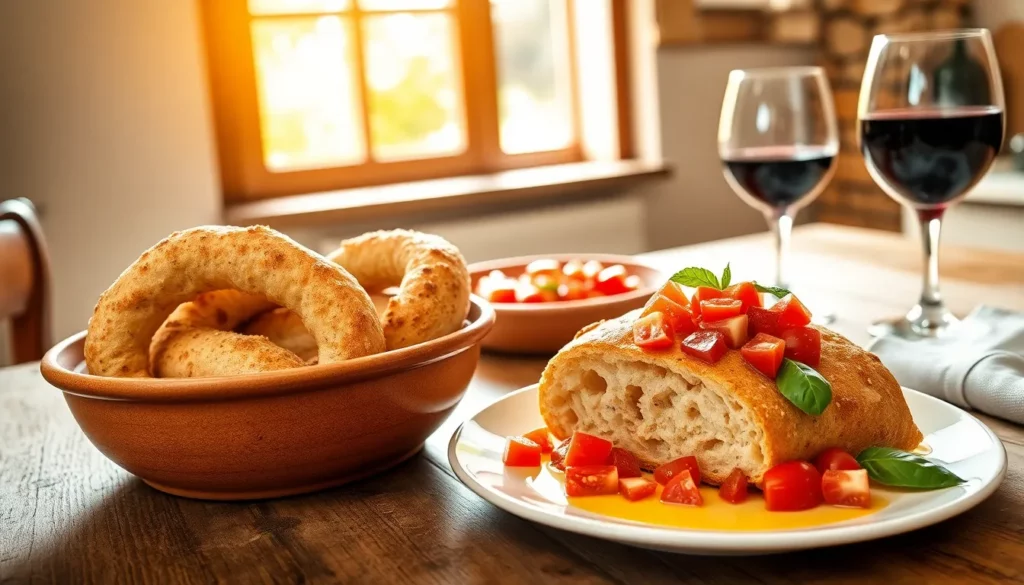
Friselle (singular: frisella) are a traditional twice-baked bread originating from the Puglia region of southern Italy. Made exclusively from durum wheat semolina (semola di grano duro), water, salt, and natural yeast, friselle are first shaped into small rings or oval loaves, baked until golden, then sliced horizontally and returned to the oven for a second drying. This process removes almost all moisture, giving friselle an exceptionally long shelf life—often several months when stored in a cool, dry place.
Historically, friselle were a staple for farmers, shepherds, and sailors who needed durable, non-perishable food. The bread’s origins can be traced back to ancient Roman times, where similar twice-baked breads (panis militaris) were issued to soldiers. Today, friselle are recognized as a Prodotto Agroalimentare Tradizionale (PAT) by the Italian Ministry of Agricultural Policies, ensuring that authentic production follows traditional methods within the designated region.
The key to friselle’s unique texture lies in the double baking: the first bake sets the structure, while the second dehydrates the interior, creating a hard, porous crumb that softens beautifully when briefly soaked in water, broth, or even wine.
Types & Grades
Friselle come in several varieties, distinguished by ingredients, shape, and regional traditions. The table below outlines the most common types:
| Type | Description | Common Uses |
|---|---|---|
| Friselle Classiche (Plain) | Made with fine durum wheat semolina; neutral flavor, very hard. | Soaked and topped with tomatoes, olive oil, oregano. |
| Friselle Integrali (Whole Wheat) | Uses whole durum wheat flour; nuttier taste, denser texture. | Ideal for hearty salads or with robust toppings like anchovies. |
| Friselle al Pomodoro | Dough incorporates sun-dried tomato paste or fresh tomato pulp. | Already flavored; often eaten without additional toppings. |
| Friselle alle Erbe | Mixed with dried herbs (oregano, rosemary, thyme) in the dough. | Perfect for pairing with mild cheeses or as a snack. |
| Friselle di Grano Arso | Made with “burnt wheat” flour (grano arso) from toasted grains. | Smoky, earthy flavor; used in traditional Pugliese dishes. |
Grades are not officially classified, but artisanal producers often indicate the coarseness of the semolina (fine vs. coarse) and the degree of toasting. Some friselle are left slightly softer for immediate consumption, while others are dried extra hard for long-term storage.
How It’s Used in Cooking
Friselle are incredibly versatile. Their most iconic preparation is the frisella con pomodoro e basilico: briefly soak a frisella in cold water (10–20 seconds), drain, then top with chopped fresh tomatoes, extra-virgin olive oil, oregano, salt, and basil. The bread absorbs the juices while retaining a slight chewiness.
Other traditional uses include:
- Acquasale – A Pugliese bread soup where friselle are soaked in salted water, then layered with tomatoes, onions, and olive oil.
- Panzanella – While typically made with stale bread, friselle can be crumbled into a tomato and cucumber salad for added crunch.
- Bruschetta base – Lightly toasted friselle can replace sliced bread for bruschetta toppings.
- Croutons – Crushed friselle make excellent crunchy toppings for pasta or soups.
- Dessert – In some areas, friselle are soaked in sweet wine and served with fresh fruit or honey.
“La frisella è il pane dei poveri che sa di ricchezza” – “Frisella is the bread of the poor that tastes of richness.” (Traditional Pugliese saying)
How to Choose/Identify Authentic FRISELLE
When purchasing friselle, look for these authenticity cues:
- Origin: Authentic friselle come from Puglia. Check for “Prodotto in Puglia” or the PAT logo.
- Ingredients: Only durum wheat semolina, water, salt, and yeast. No preservatives, oils, or sugars.
- Texture: Extremely hard and dry; should make a hollow sound when tapped. The crumb should be porous with irregular holes.
- Color: Golden to light brown, with a matte surface. Avoid shiny or overly dark pieces.
- Weight: A typical frisella (about 10 cm diameter) weighs around 30–40 grams. Lighter ones may be over-dried.
- Packaging: Artisanal producers often sell in paper bags or vacuum packs. Look for a production date and best-by period (usually 6–12 months).
For commercial buyers, sourcing directly from Pugliese mills or specialty Italian importers ensures authenticity. Avoid mass-produced versions that may contain soft wheat flour or additives.
Substitutes
If friselle are unavailable, several Italian breads can serve as substitutes, though each has distinct characteristics:
- Pane Carasau (Sardinia) – Also twice-baked, but thinner and crispier. Use for similar soaking applications, but adjust soaking time (shorter).
- Galletta (Liguria) – A hard, dry bread similar to ship’s biscuit. Good for long storage, but denser and less porous.
- Bruschetta – Fresh bread grilled or toasted. Not a direct substitute for the texture, but works for immediate consumption.
- Biscotti di Grano Duro – Hard durum wheat biscuits. Can be crumbled as a topping, but not ideal for soaking.
For the classic frisella salad, the best substitute is Pane Carasau broken into pieces and lightly moistened.
In conclusion, friselle represent a timeless example of Italian ingenuity in food preservation. Their simple ingredients and double-baking process yield a product that is both humble and sophisticated, capable of transforming simple toppings into a memorable meal. Whether enjoyed in a sun-drenched Pugliese courtyard or recreated in a home kitchen, friselle offer a taste of Italy’s rich culinary heritage.
FAQ
What is friselle?
Friselle are a traditional twice-baked bread from Puglia, Italy, made from durum wheat semolina. They are first baked, then sliced and dried again to create a hard, porous bread that can be stored for months. They are typically soaked in water before eating and topped with tomatoes, olive oil, and herbs.
How do you eat friselle?
The most common way is to briefly soak a frisella in cold water (10–20 seconds), drain, then top with chopped fresh tomatoes, extra-virgin olive oil, oregano, salt, and basil. They can also be used in soups like acquasale, crumbled into salads, or served with sweet wine for dessert.
How should I store friselle?
Store friselle in a cool, dry place in a paper bag or airtight container. They do not need refrigeration. Properly stored, they can last 6–12 months. Avoid humidity, which can make them soft or moldy.

Leave a Reply