
Short Answer
What Is Ben cotto? Italian Dessert Explained
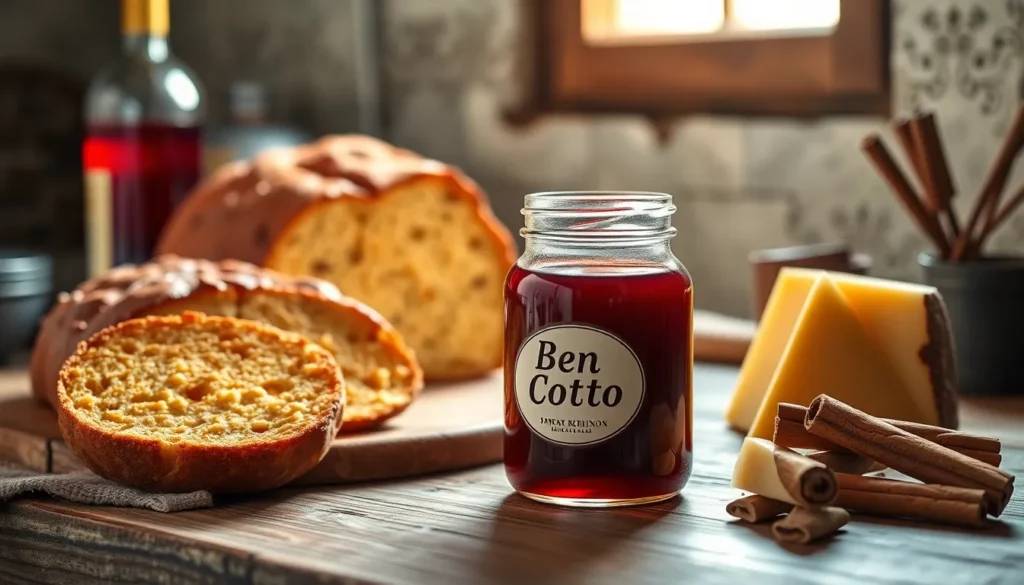
Ben cotto (literally “well cooked” in Italian) is a traditional dessert from the Veneto region of northeastern Italy, made by slowly simmering red wine with sugar, spices, and sometimes fruit until it thickens into a dense, sweet syrup or jam. The key ingredients are robust red wine (often Merlot or Cabernet from the region), sugar, cinnamon, cloves, and lemon zest. Unlike modern wine reductions, Ben cotto is cooked for hours to achieve a deep, complex flavor and a spreadable texture. It is typically served as a dessert accompaniment, spread on bread or cookies, or used as a sauce for cheese or ice cream.
Origin & History
Ben cotto originates from the Veneto region, particularly the provinces of Treviso, Vicenza, and Padua, where it has been prepared for centuries. Its roots lie in the medieval practice of preserving wine by cooking it with sugar—a method that allowed households to use leftover or slightly spoiled wine. The first written references appear in 16th-century cookbooks, such as those by Bartolomeo Scappi, who described a similar preparation called “vino cotto.” Over time, Ben cotto became a staple of peasant cuisine (cucina povera), valued for its long shelf life and ability to transform humble ingredients into a luxurious treat. Anecdotes tell of farmers preparing large batches after the grape harvest, using the sweet syrup to celebrate the end of the season.
What’s In It
The core ingredients of Ben cotto are simple: red wine, sugar, and spices. The wine is typically a full-bodied red from the Veneto, such as Merlot, Cabernet, or Raboso. Sugar is added in a ratio of about 1:4 (sugar to wine) by weight, though this varies by recipe. Spices include cinnamon sticks, cloves, and sometimes star anise or vanilla. Lemon or orange zest adds brightness. Preparation involves combining all ingredients in a large pot, bringing to a gentle boil, then reducing the heat to a low simmer for 3–6 hours, stirring occasionally, until the liquid reduces by about two-thirds and becomes syrupy. The mixture is then strained and bottled. Unlike similar preparations like vincotto (from southern Italy) or saba (cooked grape must), Ben cotto uses wine rather than grape must and is cooked longer, resulting in a thicker, more concentrated product.

Regional Variations
While Ben cotto is most closely associated with the Veneto, similar cooked wine preparations exist across Italy. The table below highlights key differences:
| Region | Name | Key Differences |
|---|---|---|
| Veneto | Ben cotto | Red wine, sugar, cinnamon, cloves; cooked to a jam-like consistency; served with cookies or cheese. |
| Emilia-Romagna | Vino cotto | White or red wine, often with honey instead of sugar; thinner consistency; used in baking or on pancakes. |
| Puglia | Vincotto | Cooked grape must (not wine), no added sugar; dark, tangy syrup; used in savory dishes and desserts. |
| Sicily | Vincotto di fichi | Made from fig must; sweet and fruity; often drizzled over gelato or cheese. |
How It’s Traditionally Eaten
Ben cotto is primarily a dessert condiment. It is served as a dolce (sweet course) or as part of a merenda (afternoon snack). Traditionally, it is spread on slices of panettone, pandoro, or simple biscuits like cantucci. It also pairs beautifully with aged cheeses such as Parmigiano-Reggiano or Gorgonzola, served as a contorno (side) to a cheese platter. In some households, it is used as a topping for polenta or pancakes. Ben cotto is an everyday treat, but it is especially popular during the Christmas season, when it accompanies festive breads and desserts.
Common Mistakes / What It’s Not
Many American-Italian adaptations confuse Ben cotto with vincotto or balsamic vinegar. Ben cotto is not a vinegar; it is a sweet syrup with no acidity from fermentation. It is also not a wine reduction used in savory cooking—its high sugar content makes it strictly a dessert ingredient. Another mistake is using cheap, low-quality wine; the final flavor depends heavily on the wine’s character. Additionally, some recipes add cornstarch to thicken quickly, which is inauthentic—traditional Ben cotto relies on slow evaporation. Finally, Ben cotto should not be confused with saba, which is made from cooked grape must and has a different flavor profile.
Where to Try It / What to Order
To experience authentic Ben cotto, visit the Veneto region, especially the provinces of Treviso and Vicenza. Look for it in osterie and trattorie that serve traditional local cuisine. In Treviso, try Osteria al Cacciatore or Trattoria da Gigi. In Vicenza, Antica Osteria al Cavallino offers a homemade version. During the autumn harvest festivals, such as the Festa dell’Uva in Breganze, Ben cotto is often sold by local producers. When ordering, ask for “Ben cotto con formaggio” (with cheese) or “Ben cotto su pane” (on bread). You can also purchase artisanal jars at local markets or enotecas.
Related Dishes
FAQ
What is Ben cotto?
Ben cotto is a traditional Italian dessert syrup from the Veneto region, made by slowly cooking red wine with sugar and spices until thick and sweet.
How is Ben cotto different from vincotto?
Ben cotto is made from wine, while vincotto is made from grape must. Ben cotto is sweeter and thicker, with added sugar and spices.
Can I make Ben cotto at home?
Yes, but it requires patience. Use a good red wine, sugar, cinnamon, cloves, and lemon zest. Simmer for 3–6 hours until reduced by two-thirds, then strain and bottle.
What does Ben cotto taste like?
It has a rich, sweet, and slightly spiced flavor with deep wine notes, similar to a fruit jam but with a complex, cooked-wine character.
Is Ben cotto alcoholic?
Most of the alcohol evaporates during the long cooking process, but a trace may remain. It is generally considered non-alcoholic for culinary purposes.


Leave a Reply