
Short Answer
What Is Dado? Italian Soup Explained
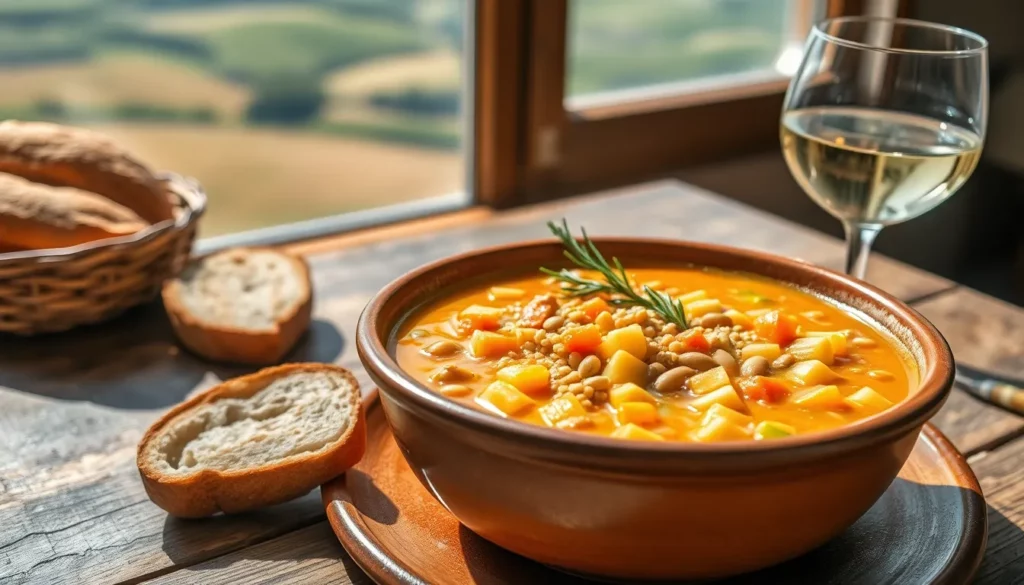
Dado is a traditional Italian soup originating from the Marche region of central Italy. It is a hearty, brothy dish characterized by small square pasta (dadi) cooked with seasonal vegetables, legumes, and often a base of meat broth. The name “dado” means “dice” in Italian, referring to the pasta shape. Key ingredients include farro or other grains, beans, carrots, celery, onions, and sometimes pancetta or pork rind. Dado is a quintessential example of cucina povera (peasant cooking), transforming simple ingredients into a deeply satisfying meal.
Origin & History
Dado has its roots in the rural traditions of the Marche region, particularly in the provinces of Ancona and Macerata. The dish likely emerged during the Middle Ages, when farmers and shepherds needed a filling, one-pot meal that could be made with pantry staples. Historical records from the 16th century mention “minestra di dado” in local cookbooks, though the modern version solidified in the 19th century. Unlike myths that claim Dado was a noble dish, it was always a humble fare, often prepared with leftover broth and dried pasta. A unique anecdote tells of Marche women preparing Dado for harvest festivals, adding wild herbs foraged from the hillsides.
What’s In It
Core ingredients of Dado include:
- Pasta dadi – small square pasta, similar to quadrucci but slightly larger.
- Broth – typically chicken or beef broth, sometimes vegetable-based.
- Vegetables – carrots, celery, onions, and often zucchini or potatoes.
- Legumes – cannellini beans or chickpeas, soaked and cooked.
- Grains – farro or barley for added texture.
- Pork – optional pancetta or pork rind for richness.
- Herbs – rosemary, thyme, and bay leaf.
Preparation involves sautéing aromatics, adding broth and grains, then pasta and vegetables. Unlike similar soups like minestrone, Dado is less thick and uses only small square pasta, not a mix of shapes. It is also distinct from “stracciatella” (egg drop soup) as it contains pasta and legumes.
Regional Variations
| Region | Key Differences |
|---|---|
| Marche (Ancona) | Uses farro, cannellini beans, and pork rind; broth is often beef-based. |
| Umbria | Adds black truffle shavings and uses spelt instead of farro; lighter broth. |
| Lazio | Includes Romanesco broccoli and guanciale; pasta may be replaced by small gnocchi. |
| Abruzzo | Features lamb broth and saffron; often served with grated pecorino. |
How It’s Traditionally Eaten
Dado is served as a primo piatto (first course) in a traditional Italian meal, followed by a secondo of meat or fish. It is typically eaten for lunch, especially during colder months. On festive occasions like Christmas Eve, Dado may be enriched with seafood broth. Everyday versions are simpler, using vegetable broth and leftover pasta. Pairings include a slice of crusty bread and a glass of Verdicchio white wine. It is never served with grated cheese unless specified, as the broth is already flavorful.
Common Mistakes / What It’s Not
Many American-Italian adaptations mistakenly treat Dado as a thick stew or add heavy cream, which is not traditional. Dado is not a minestrone – it has a clear broth and only one pasta shape. It is also not a “dado” as in bouillon cube; the name refers to the pasta shape. Avoid overcooking the pasta; it should be al dente. Some recipes incorrectly use large pasta like penne; authentic Dado uses only small square dadi. Also, Dado is not a vegetarian dish by default – many versions include pork, but vegetarian variants exist.
Where to Try It / What to Order
For an authentic Dado, visit the Marche region, especially in the town of Jesi or Urbino. Look for trattorias like “Osteria del Dado” in Ancona or “Ristorante La Vecchia Cucina” in Macerata. Order “Dado con farro e fagioli” (with farro and beans) or “Dado di carne” (meat-based). During the Sagra del Dado festival in September in the village of Offagna, you can taste multiple variations. When ordering, specify “dado tradizionale” to avoid touristy versions. If traveling outside Italy, seek out authentic Italian delis that import Marche specialties.
Related Dishes
FAQ
What does 'Dado' mean in Italian?
Dado means 'dice' or 'cube' in Italian, referring to the small square pasta shape used in the soup.
Is Dado the same as minestrone?
No, Dado is a clear broth soup with only one pasta shape (dadi) and often includes grains like farro, while minestrone is thicker and uses a variety of pasta shapes and vegetables.
Can Dado be made vegetarian?
Yes, traditional Dado can be made with vegetable broth and omitting pork, though many versions include meat broth or pancetta for flavor.
What is the best pasta for Dado?
Authentic Dado uses dadi pasta – small squares about 1 cm per side. If unavailable, quadrucci or broken lasagna sheets can be substituted.
When is Dado typically eaten?
Dado is a winter comfort food, often served as a primo piatto for lunch. It is also popular during harvest festivals in the Marche region.
Leave a Reply