
Short Answer
What Is Macinato? Italian Ground Meat Explained
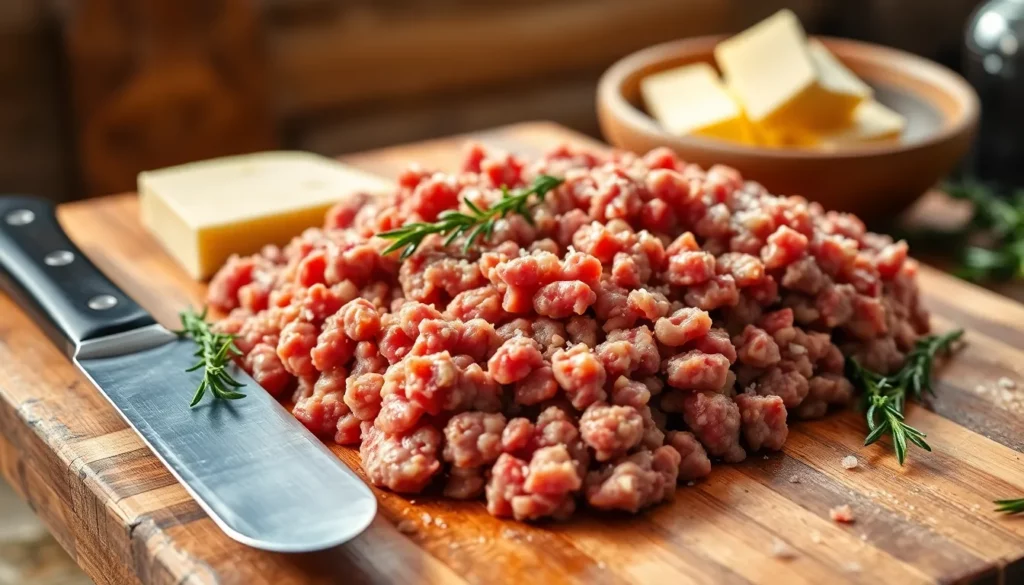
Macinato (pronounced mah-chee-NAH-toh) is the Italian word for “ground” or “minced” meat, typically beef, pork, veal, or a combination. It is a fundamental ingredient in Italian cuisine, used in dishes such as polpette (meatballs), ragù (meat sauce), and sformati (meat loaves). Unlike generic ground meat, Italian macinato is often seasoned with salt, pepper, and regional herbs before cooking. It originates from central and northern Italy, particularly Emilia-Romagna, where it is the base of the famous ragù alla bolognese. Key ingredients include high-quality meat, often coarsely ground, and simple seasonings that let the meat flavor shine.
Origin & History
The practice of grinding meat dates back to ancient Rome, where mortaria (mortars) were used to pound meat for dishes like isicia (Roman meatballs). However, the term macinato and its modern usage emerged in the Middle Ages, particularly in Bologna, where butchers developed fine mincing techniques. The invention of the mechanical meat grinder in the 19th century by Karl Drais (though later refined) popularized macinato across Italy. Anecdote: In Bologna, the traditional ragù recipe specifies that the meat should be “macinato due volte” (ground twice) for a silky texture. Myths: Some believe macinato is only for cheap cuts, but Italians often use premium cuts like chuck or sirloin to ensure flavor and texture.
What’s In It
Core ingredients: Fresh meat (beef, pork, veal, or lamb), salt, black pepper, and sometimes garlic, parsley, or grated cheese (Parmigiano-Reggiano or Pecorino). Preparation nuances: The meat is ground to order, often with a coarse plate to retain texture. It is not overworked to avoid toughness. Differentiate from similar dishes: Unlike American “ground beef,” Italian macinato is rarely pre-seasoned with breadcrumbs or eggs; those are added only when making specific dishes like polpette. Macinato is the raw ingredient, not a finished dish. The quality of the meat is paramount; many Italian butchers (macellai) offer a mix of beef and pork for a balanced flavor.
Regional Variations
| Region | Characteristics | Common Uses |
|---|---|---|
| Emilia-Romagna | Fine grind, beef and pork mix, no garlic | Ragù alla bolognese, tortellini filling |
| Naples (Campania) | Coarse grind, often beef with garlic and parsley | Polpette al sugo, ragù napoletano |
| Sicily | Lamb or beef, with raisins, pine nuts, and cinnamon | Polpette alla siciliana, involtini |
| Rome (Lazio) | Veal or beef, seasoned with pecorino and nutmeg | Polpette al sugo, saltimbocca (though not ground) |
How It’s Traditionally Eaten
Macinato itself is not a course; it is an ingredient. It appears in primi (first courses) like ragù over pasta, secondi (main courses) like polpette or meatloaf, and even contorni (side dishes) when used in stuffed vegetables. It is everyday fare, but special occasions like Sunday lunch feature elaborate ragù. Pairings: With pasta (tagliatelle, pappardelle), polenta, or crusty bread. Wine: A robust Sangiovese or Barbera complements the richness of the meat. In some regions, macinato is also used in savory pies or as a filling for cannoli-like pastries.
Common Mistakes / What It’s Not
Mistake 1: Using pre-packaged, finely ground meat from supermarkets – Italian macinato is coarsely ground fresh. Mistake 2: Over-seasoning with herbs like oregano or cumin – Italian macinato relies on salt and pepper. Mistake 3: Treating it as a standalone dish – macinato is a base, not a finished product. What it’s not: It is not “hamburger” (which is a specific patty), nor is it “sausage” (which is seasoned and cased). It is not “ragù” (which is a slow-cooked sauce). Understanding these distinctions helps avoid common American-Italian misconceptions.
Where to Try It / What to Order
To experience authentic macinato, visit a macelleria (butcher shop) in Italy and ask for “macinato di manzo” or “macinato misto.” In restaurants, order dishes like “tagliatelle al ragù” in Bologna, “polpette al sugo” in Naples, or “involtini di carne” in Sicily. For travelers, the annual “Sagra della Polpetta” in various towns celebrates ground meat dishes. Ordering tip: Specify “macinato fresco” to ensure freshness. If you’re cooking at home, seek out a reputable butcher who grinds meat to order.
Related Dishes
- Polpette (Italian Meatballs)
- Ragù alla Bolognese
- Salsiccia (Italian Sausage)
- Involtini (Stuffed Meat Rolls)
- Polpettone (Italian Meatloaf)
FAQ
What is the difference between macinato and ground beef?
Macinato is the Italian term for ground meat, but it emphasizes freshness, coarse grind, and minimal seasoning. American ground beef is often finely ground and may include additives. Italian macinato is typically prepared to order by a butcher.
Can I use macinato for hamburgers?
Yes, but traditional Italian macinato is not seasoned for burgers. If making hamburgers, you can use macinato di manzo (ground beef) and season it simply with salt and pepper. However, in Italy, hamburgers are less common than polpette or ragù.
How should I store macinato?
Fresh macinato should be refrigerated and used within 1-2 days. For longer storage, freeze it in airtight portions. Thaw in the refrigerator before use. Avoid refreezing.
Is macinato the same as ragù?
No. Macinato is the raw ground meat, while ragù is a slow-cooked sauce made from macinato, vegetables, wine, and tomatoes. Ragù is a finished dish; macinato is an ingredient.
What cut of meat is best for macinato?
For beef, chuck or sirloin are ideal for their fat content and flavor. For pork, shoulder or belly. Many Italian butchers use a mix of beef and pork for a balanced taste.

Leave a Reply