
Short Answer
What Is Bozza pratese? Italian Bread Explained
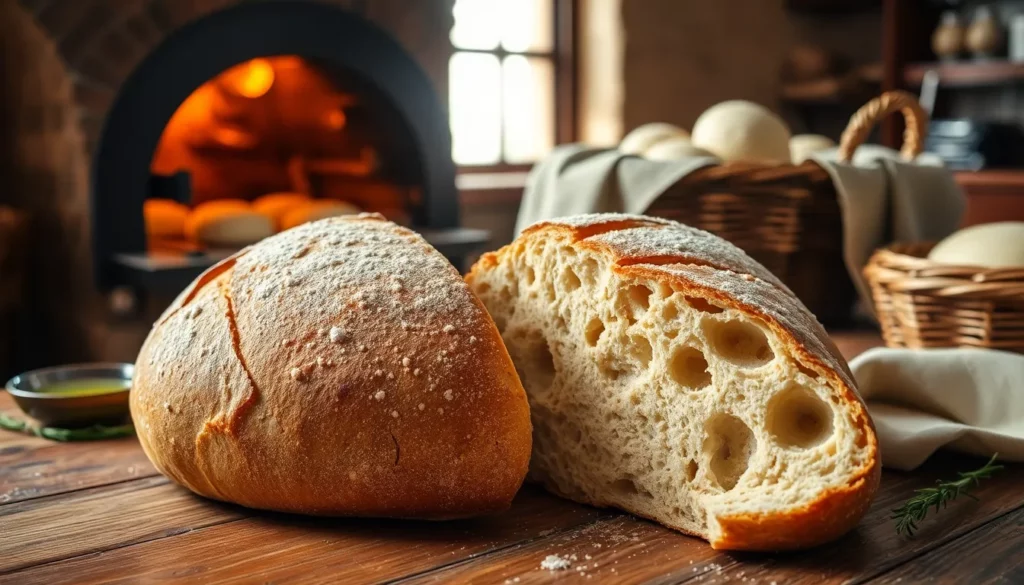
Bozza pratese is a traditional Italian bread originating from the city of Prato in Tuscany. It is a large, round loaf characterized by a thick, golden-brown crust and a soft, irregular crumb with large air holes. The name “Bozza” means “bump” or “lump” in Italian, referring to its rustic, uneven shape. Key ingredients include high-protein wheat flour, water, salt, and a natural sourdough starter (lievito madre). Some variations incorporate extra-virgin olive oil or lard for added tenderness. Unlike many other Tuscan breads, Bozza pratese is not saltless; it contains salt, giving it a distinct savory flavor that pairs well with cured meats and cheeses.
Origin & History
Bozza pratese has deep roots in the culinary traditions of Prato, a city in central Tuscany known for its textile industry and rich food culture. The bread likely emerged in the Middle Ages, when local bakers developed a large, long-lasting loaf that could feed families and workers for several days. Historical records from the 14th century mention “pane di Prato” as a staple, but the specific term “Bozza” appears later, possibly in the 19th century, to describe the characteristic lumpy shape. Unlike myths that claim all Tuscan bread is saltless (a practice from the 16th-century salt tax in Florence), Bozza pratese always included salt, reflecting Prato’s independent culinary identity. Anecdotes tell of bakers shaping the dough by hand, leaving it to rise in linen cloths, and baking it in wood-fired ovens, a method still used by artisan bakeries today.
What’s In It
The core ingredients of Bozza pratese are simple but require quality: flour (usually a blend of strong white and whole wheat), water, salt, and a sourdough starter. Some recipes add a small amount of extra-virgin olive oil or lard to enrich the crumb and extend shelf life. The preparation involves a long fermentation (12–24 hours) to develop flavor and digestibility. The dough is shaped into a large round, often weighing 1–2 kg, and slashed on top to allow expansion. It is baked at high temperature (220–250°C) to create a thick crust. Bozza pratese differs from similar Italian breads like Pane Toscano (which is saltless) or Pugliese (which uses durum wheat and has a denser crumb). Its hallmark is the contrast between the hard, crackling crust and the soft, holey interior.
Regional Variations
While Bozza pratese is specific to Prato, other Tuscan towns have their own bread traditions. The table below highlights key differences:
| Region | Bread Name | Key Characteristics |
|---|---|---|
| Prato (Tuscany) | Bozza pratese | Large round, thick crust, salted, sourdough, often with olive oil |
| Florence (Tuscany) | Pane Toscano | Saltless, large round, thin crust, sourdough |
| Puglia (Southern Italy) | Pane Pugliese | Durum wheat, dense crumb, often shaped as a large ring or oval |
| Liguria (Northwest) | Focaccia Genovese | Flat, oil-rich, soft, often topped with herbs or salt |
Within Tuscany, variations include adding olives, rosemary, or sun-dried tomatoes to the dough, but purists insist the classic Bozza pratese is plain to best accompany savory dishes.
How It’s Traditionally Eaten
Bozza pratese is a versatile table bread served throughout the day. It is not a specific course but rather an accompaniment. For breakfast, it may be toasted and drizzled with olive oil. At lunch, it is used for panini (sandwiches) filled with prosciutto, pecorino, or lampredotto (tripe). In the evening, it is sliced and served alongside salumi and formaggi as part of an antipasto. A classic Pratese dish is bruschetta made with Bozza pratese, rubbed with garlic, topped with fresh tomatoes and basil. On holidays, the bread is often presented whole on the table, and diners tear off pieces by hand. It is an everyday bread, but its large size makes it ideal for family gatherings and feasts.
Common Mistakes / What It’s Not
A frequent misconception is that all Tuscan bread is saltless. While Pane Toscano from Florence is indeed saltless, Bozza pratese contains salt, giving it a more pronounced flavor. Another mistake is confusing Bozza pratese with focaccia or ciabatta; the former is a flat, oil-rich bread, while the latter is a slipper-shaped loaf with a very open crumb. Bozza pratese is not a dessert bread, nor is it typically sweetened. Travelers may also assume it is the same as pane di Altamura (from Puglia), but that bread uses durum wheat and has a different texture. To avoid errors, look for the specific name “Bozza pratese” at bakeries in Prato, and note its large, round shape and thick crust.
Where to Try It / What to Order
The best place to experience authentic Bozza pratese is in Prato itself. Visit historic bakeries such as Forno di Prato (Via Garibaldi) or Panificio Gori, where wood-fired ovens are still used. Many local trattorie serve it as part of a tagliere (board of cured meats and cheeses). For travelers, ordering a panino con lampredotto on Bozza pratese is a must-try street food experience. The annual Sagra del Pane (Bread Festival) in Prato, held in September, celebrates this bread with tastings and demonstrations. If you cannot visit, some Italian specialty shops in major cities import it, but freshness is key—look for a loaf with a hard crust that sounds hollow when tapped.
Related Dishes
FAQ
What is Bozza pratese?
Bozza pratese is a traditional large, round sourdough bread from Prato, Tuscany, with a thick crust and soft, holey crumb. It is made with wheat flour, water, salt, and a natural starter, often enriched with olive oil.
How is Bozza pratese different from other Tuscan breads?
Unlike the saltless Pane Toscano from Florence, Bozza pratese contains salt, giving it a savory flavor. It also has a thicker crust and a more irregular crumb compared to other regional breads.
Where can I buy authentic Bozza pratese?
The best place is in Prato, at bakeries like Forno di Prato or Panificio Gori. Some Italian specialty shops in major cities may also carry it, but freshness is essential.
Can I make Bozza pratese at home?
Yes, but it requires a sourdough starter and a long fermentation. Recipes are available online, but achieving the characteristic crust and crumb may require a high-temperature oven and steam.
What dishes pair well with Bozza pratese?
It is excellent with cured meats (prosciutto, salami), cheeses (pecorino, parmigiano), olive oil, and tomatoes. It is also used for panini and bruschetta.
Leave a Reply