
Short Answer
What Is Chitarra? Italian Pasta Explained
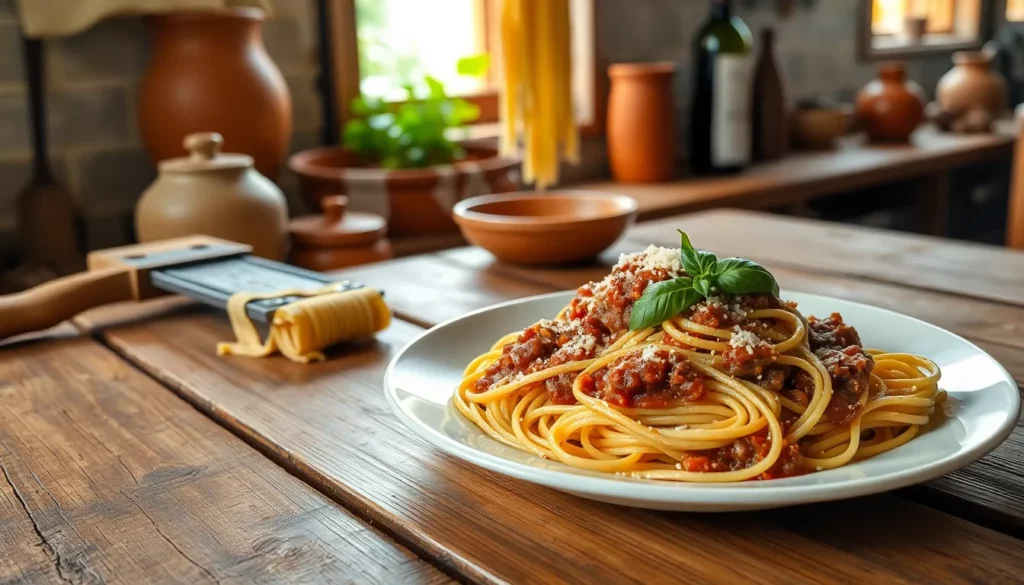
Chitarra (pronounced kee-TAHR-rah) is a distinctive type of fresh egg pasta originating from the Abruzzo region of central Italy. Its name means “guitar” in Italian, a reference to the traditional tool used to cut it: a wooden frame strung with parallel wires that resemble guitar strings. The dough is rolled out into a thin sheet, placed over the wires, and pressed through to create long, square-shaped strands. Unlike round spaghetti or flat fettuccine, chitarra has a slightly rough, porous surface that clings exceptionally well to sauces. The classic pairing is with a robust lamb ragù (spaghetti alla chitarra), but it also shines with simple tomato and basil or with vegetables. Chitarra is a Protected Traditional Agri-Food Product (PAT) of Italy, reflecting its deep cultural roots in Abruzzese cuisine.
Origin & History
Chitarra is inextricably linked to the Abruzzo region, particularly the provinces of Teramo, Pescara, and L’Aquila. Its documented history dates back to the 19th century, though some food historians suggest that the technique of cutting pasta on wires may have earlier origins in the rural kitchens of the Apennine mountains. The invention of the chitarra tool is often attributed to the need for a pasta shape that could hold up to hearty, meat-based sauces without becoming mushy. The square cross-section and rough texture were ideal for trapping ragù. A popular anecdote claims that the tool was inspired by the musical instrument, as shepherds would use guitar strings to cut pasta while tending flocks. While charming, this story is likely apocryphal; the tool’s design is purely functional. Nevertheless, chitarra became a symbol of Abruzzese culinary identity, and in 2015 it was officially recognized as a PAT product, ensuring its traditional production methods are preserved.
What’s In It
The core ingredients for chitarra are simple: all-purpose flour (or a mix of semolina and soft wheat flour), fresh eggs, and a pinch of salt. Some traditional recipes add a drizzle of olive oil to the dough for extra elasticity. The dough is kneaded until smooth, rested, and rolled into a thin sheet about 1–2 mm thick. The sheet is then placed on the chitarra tool and pressed through with a rolling pin, producing strands that are square in cross-section. Unlike spaghetti, which is round, or fettuccine, which is flat, chitarra has four distinct edges. This shape gives it a firmer bite (al dente) and a greater surface area for sauce adhesion. The pasta is typically cooked in salted boiling water for 2–4 minutes, depending on thickness. It is never dried commercially; authentic chitarra is always fresh, though some artisanal producers now offer dried versions. The classic sauce is ragù alla chitarra, a slow-cooked lamb or goat ragù with tomatoes, garlic, and pecorino cheese. Other traditional condiments include sugo di cinghiale (wild boar sauce) or a simple aglio, olio e peperoncino.

Regional Variations
While chitarra is quintessentially Abruzzese, variations exist within the region and in neighboring areas. The table below highlights key differences:
| Region | Dough Composition | Typical Sauce | Notes |
|---|---|---|---|
| Abruzzo (Teramo) | Eggs + soft wheat flour | Lamb ragù with tomatoes, garlic, and pecorino | Most traditional; often served on Sundays or holidays |
| Abruzzo (Pescara) | Eggs + semola di grano duro | Wild boar or pork ragù | Denser texture; sometimes served with mushrooms |
| Molise | Eggs + all-purpose flour | Tomato and basil or cacio e pepe-style | Lighter sauce; often paired with vegetables like zucchini |
| Lazio (Rome) | Eggs + semolina | Carbonara or amatriciana (non-traditional) | Adaptation by Roman restaurants; not authentic but popular |
Outside Italy, chitarra is sometimes confused with maccheroni alla chitarra, which is the same pasta. In the United States, some chefs use the chitarra tool to cut other doughs, such as whole wheat or gluten-free, but purists insist on the traditional egg dough.
How It’s Traditionally Eaten
In Abruzzo, chitarra is served as a primo piatto (first course), typically followed by a meat dish (secondo) and contorno (side vegetables). It is a celebratory pasta, often prepared for Sunday lunches, family gatherings, and festivals such as the Sagra della Chitarra in the town of Civitella Casanova. The pasta is always cooked fresh and tossed immediately with the sauce. Grated pecorino or parmesan is offered at the table. Wine pairings include Montepulciano d’Abruzzo (red) for meat sauces or Trebbiano d’Abruzzo (white) for lighter preparations. Chitarra is rarely eaten as a standalone dish; it is meant to be part of a multi-course meal. In modern dining, it appears on menus in trattorias and osterie throughout Abruzzo, and increasingly in upscale Italian restaurants worldwide.
Common Mistakes / What It’s Not
One frequent misconception is that chitarra is simply another name for spaghetti. In reality, spaghetti is round and extruded, while chitarra is square and cut. Another mistake is treating it like dried pasta: fresh chitarra cooks in a fraction of the time (2–4 minutes) and should not be overcooked. American-Italian adaptations sometimes serve chitarra with heavy cream sauces or meatballs, which are not traditional. The authentic experience is a light coating of ragù that clings to the pasta’s rough surface. Additionally, chitarra is not the same as pici (thick hand-rolled pasta from Tuscany) or bigoli (thick spaghetti from Veneto). It is also not a filled pasta like ravioli. Finally, the tool itself is sometimes called a chitarra, but the pasta is properly referred to as spaghetti alla chitarra or maccheroni alla chitarra.
Where to Try It / What to Order
For the most authentic experience, visit Abruzzo. In the town of Teramo, try Ristorante La Torre or Osteria del Vicolo for traditional lamb ragù. In Pescara, Ristorante La Barcaccia offers a wild boar version. The annual Sagra della Chitarra in Civitella Casanova (August) features multiple local producers. Outside Italy, seek out Italian restaurants that specialize in regional cuisine, such as Felidia in New York or Osteria Francescana in Modena (though the latter is more avant-garde). When ordering, ask for spaghetti alla chitarra con ragù d’agnello (with lamb ragù) or con sugo di cinghiale (with wild boar). Avoid versions with cream or seafood, as these are not traditional. If you want to make it at home, purchase a chitarra tool from Italian kitchenware stores or online, and use a recipe from a trusted source like La Cucina Italiana.
Related Dishes
FAQ
What is chitarra pasta?
Chitarra is a fresh egg pasta from Abruzzo, Italy, cut into square strands using a tool with parallel wires called a chitarra (guitar). It is typically served with lamb ragù.
How is chitarra different from spaghetti?
Spaghetti is round and extruded, while chitarra is square and cut. Chitarra has a rougher surface that holds sauce better, and it is always fresh, not dried.
What sauce goes with chitarra?
The traditional sauce is lamb ragù (ragù d'agnello). Other options include wild boar sauce, simple tomato and basil, or aglio, olio e peperoncino. Cream sauces are not traditional.
Can I buy dried chitarra?
Authentic chitarra is fresh, but some artisanal producers offer dried versions. However, the texture and cooking time differ. For the best experience, make or buy fresh.
Where can I try chitarra in Italy?
In Abruzzo, especially in Teramo, Pescara, and L'Aquila. Look for trattorias serving 'spaghetti alla chitarra con ragù d'agnello'. The Sagra della Chitarra festival in Civitella Casanova is also a great opportunity.


Leave a Reply