
Short Answer
What It Is
Cipolle (Italian for onions) are a cornerstone of Italian gastronomy, cultivated for millennia across the peninsula. The term encompasses numerous local varieties, many of which have earned prestigious DOP (Denominazione di Origine Protetta) or PGI (Indicazione Geografica Protetta) status from the European Union. These certifications guarantee that the onions are produced, processed, and prepared in a specific geographical region using traditional methods.
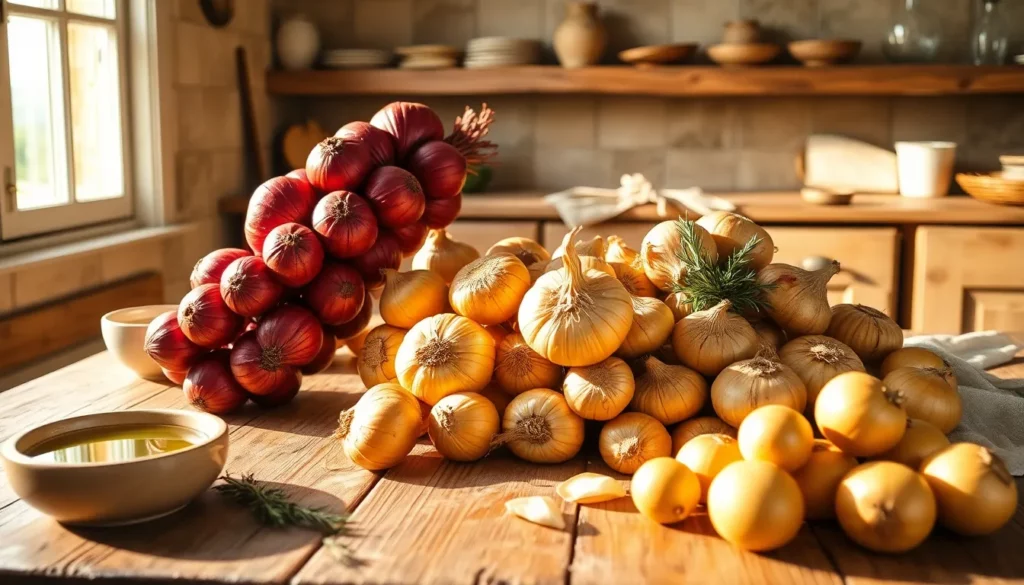
Italy’s diverse microclimates and soils give rise to distinct onion types: the flat, copper-skinned Cipolla di Giarratana (PGI) from Sicily, known for its enormous size and sweetness; the elongated, deep red Cipolla Rossa di Tropea (PGI) from Calabria, prized for its mild, almost fruity flavor; and the golden Cipolla di Certaldo (DOP) from Tuscany, with a delicate, non-pungent character. Production methods vary: some are harvested in spring as fresh cipollotti (spring onions), while others are fully cured for long storage. The bulbs are typically hand-harvested, sun-dried, and often braided into traditional trecce (braids) for preservation and sale.
Types & Grades
Italian cipolle are classified by variety, region, and curing stage. The table below outlines the most prominent DOP/PGI types and their characteristics.
| Variety | Region | Certification | Appearance | Flavor Profile | Typical Use |
|---|---|---|---|---|---|
| Cipolla Rossa di Tropea | Calabria | PGI | Elongated, deep red skin, white flesh with red rings | Sweet, mild, low pungency | Raw in salads, on bruschetta, or caramelized |
| Cipolla di Giarratana | Sicily | PGI | Large, flat, copper-bronze skin, white flesh | Very sweet, delicate, almost sugary | Stuffed, baked, or in soups |
| Cipolla di Certaldo | Tuscany | DOP | Round, golden-yellow skin, white flesh | Mild, slightly sweet, non-pungent | Raw in pinzimonio, or cooked in stews |
| Cipolla di Montoro | Campania | DOP | Ovoid, reddish-bronze skin, white flesh | Sweet, aromatic, with a hint of spice | Preserved in agrodolce, or as a side dish |
| Cipolla di Cannara | Umbria | DOP | Small, flat, golden skin, white flesh | Intense, sweet, with a lingering finish | Stuffed, or used in frittatas |
Beyond these, onions are graded by size (e.g., calibro for diameter) and curing stage: cipollotti (fresh spring onions with green tops), cipolle fresche (freshly harvested, not fully cured), and cipolle secche (fully cured, dried for storage).
How It’s Used in Cooking
Italian chefs leverage the unique sweetness and mildness of DOP cipolle to create dishes where the onion is the star, not just a background note. Cipolla Rossa di Tropea is famously served raw in insalata di cipolle with olive oil, salt, and oregano, or atop bruschetta. Its natural sugars caramelize beautifully, making it ideal for cipolle caramellate served with polenta or grilled meats.
Cipolla di Giarratana, due to its enormous size (often over 1 kg), is frequently hollowed out and stuffed with a mixture of breadcrumbs, cheese, herbs, and anchovies, then baked until tender. In Sicily, it is also used in cipollata, a sweet-and-sour onion soup. Cipolla di Certaldo is the classic choice for pinzimonio (raw vegetable dip) and for the traditional Tuscan ribollita soup, where its mildness blends seamlessly with beans and kale.
Other applications include frittata di cipolle, torta di cipolle (onion pie), and confit di cipolle (slow-cooked in olive oil). In professional kitchens, these onions are often used to build sofrito bases, but their premium quality means they are also showcased in simple preparations that let their flavor shine.
How to Choose/Identify Authentic Cipolle
To ensure you are purchasing genuine DOP or PGI cipolle, look for the following cues:
- Labeling: Authentic products will carry the EU DOP or PGI logo on the packaging, along with the consortium’s seal (e.g., Consorzio di Tutela della Cipolla Rossa di Tropea).
- Appearance: Each variety has distinct visual traits. Tropea onions are elongated with a vibrant red hue; Giarratana are flat and massive; Certaldo are round and golden. Avoid bulbs that look generic or lack characteristic shape.
- Texture and Weight: Fresh cipolle should feel heavy for their size, with tight, unblemished skins. For cured onions, the outer skin should be papery and dry, with no soft spots.
- Aroma: Authentic Italian onions have a sweet, mild scent even when raw. If the onion smells harsh or overly pungent, it is likely a common commercial variety.
- Source: Purchase from reputable Italian grocers, farmers’ markets, or directly from producers. Online retailers specializing in Italian imports often provide certificates of origin.
“The true cipolla di Tropea is so sweet you can eat it like an apple,” – traditional Calabrian saying.
Substitutes
If a specific DOP cipolla is unavailable, Italian cooks turn to other regional varieties that share similar properties. For Cipolla Rossa di Tropea, the best substitute is another sweet red onion, such as the Cipolla di Montoro (DOP) or the Cipolla di Cannara (DOP), both of which offer comparable sweetness and mildness. For Cipolla di Giarratana, the Cipolla di Certaldo can be used in cooked dishes, though it is smaller; alternatively, a large, sweet Spanish onion (like the cebolla dulce) may work, but it lacks the terroir complexity. In raw preparations, cipollotti (spring onions) can substitute for fresh Tropea onions, though they are more pungent. For general cooking, any sweet Italian onion (e.g., Cipolla di Parma) will suffice, but the DOP varieties are irreplaceable for traditional recipes.
Conclusion
Italian cipolle are far more than a kitchen staple; they are a testament to Italy’s agricultural diversity and culinary heritage. From the sun-baked fields of Calabria to the hills of Tuscany, each DOP and PGI variety offers a unique expression of terroir. Whether enjoyed raw in a simple salad or slow-cooked into a rich confit, these onions elevate dishes with their natural sweetness and complexity. By understanding their origins, grades, and uses, cooks can make informed choices that honor tradition and deliver exceptional flavor.
FAQ
What is the difference between Cipolla Rossa di Tropea and other red onions?
Cipolla Rossa di Tropea is a PGI-certified variety from Calabria, known for its elongated shape, deep red skin, and exceptionally sweet, mild flavor with low pungency. Other red onions, like common supermarket varieties, are often more pungent and lack the same sweetness and terroir complexity.
Can I use regular onions instead of DOP cipolle in Italian recipes?
While you can substitute regular onions, the result will differ significantly. DOP cipolle are prized for their sweetness and mildness, which are key to traditional dishes like raw salads or caramelized onions. For cooked dishes where the onion is not the star, a standard yellow onion may work, but for authentic flavor, seek out Italian DOP varieties.
How should I store fresh cipollotti and cured cipolle?
Fresh cipollotti (spring onions) should be stored in the refrigerator, wrapped in a damp paper towel, and used within a week. Cured cipolle (dry onions) should be kept in a cool, dark, well-ventilated place, away from potatoes, and can last several months. Braided onions can be hung in a pantry.
Are all Italian onions sweet?
Not all, but the most famous DOP/PGI varieties are notably sweet due to their high sugar content and low pyruvate levels. Other Italian onions, such as those grown in northern regions, can be more pungent. The sweetness is a result of both genetics and growing conditions.


Leave a Reply